Day 3 of the SPEARHEAD School 2026 continued the journey through energetic-particle physics, combining lectures on Galactic Cosmic Rays (GCRs), Forbush Decreases (FDs) and Solar Energetic Particles (SEPs) with hands-on exploration of tools developed within the SPEARHEAD and SOLER projects.
The first lecture was delivered by Mateja Dumbović, who introduced the physics of Galactic Cosmic Rays and Forbush Decreases, discussing how transient solar-wind structures such as CMEs and their interplanetary counterparts, as well as Corotating Interaction Regions (CIRs), can modulate the Galactic Cosmic Ray population observed throughout the heliosphere. She further highlighted the focus on the modeling and the interpretation of Forbush decreases driven by different sources.
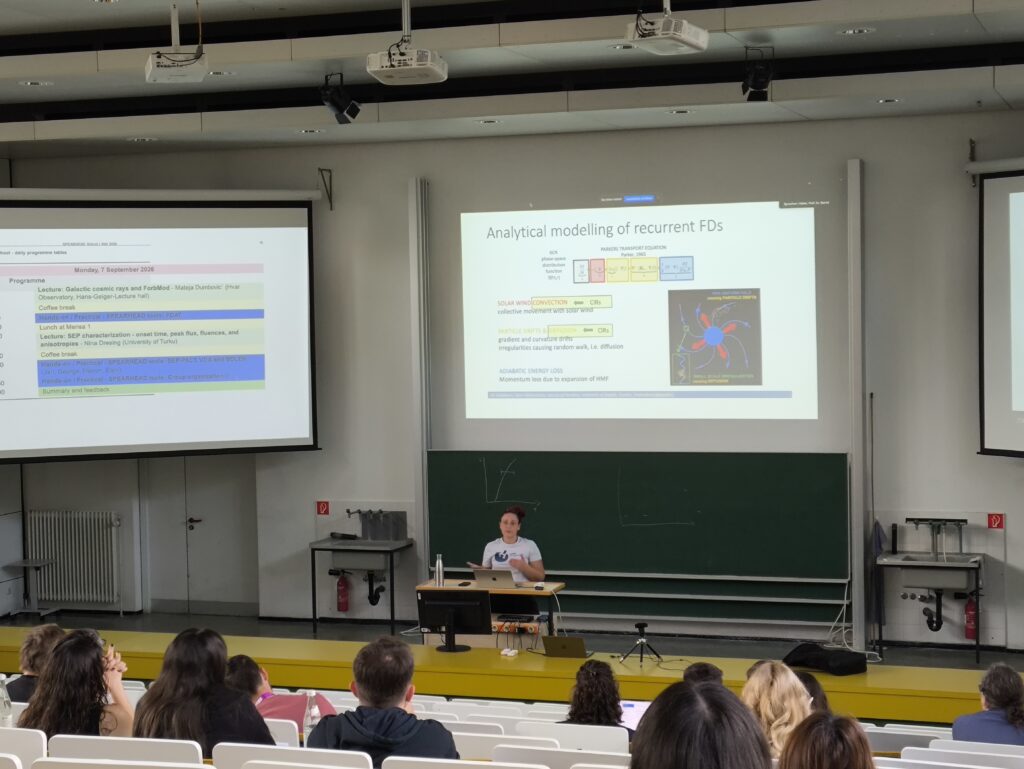
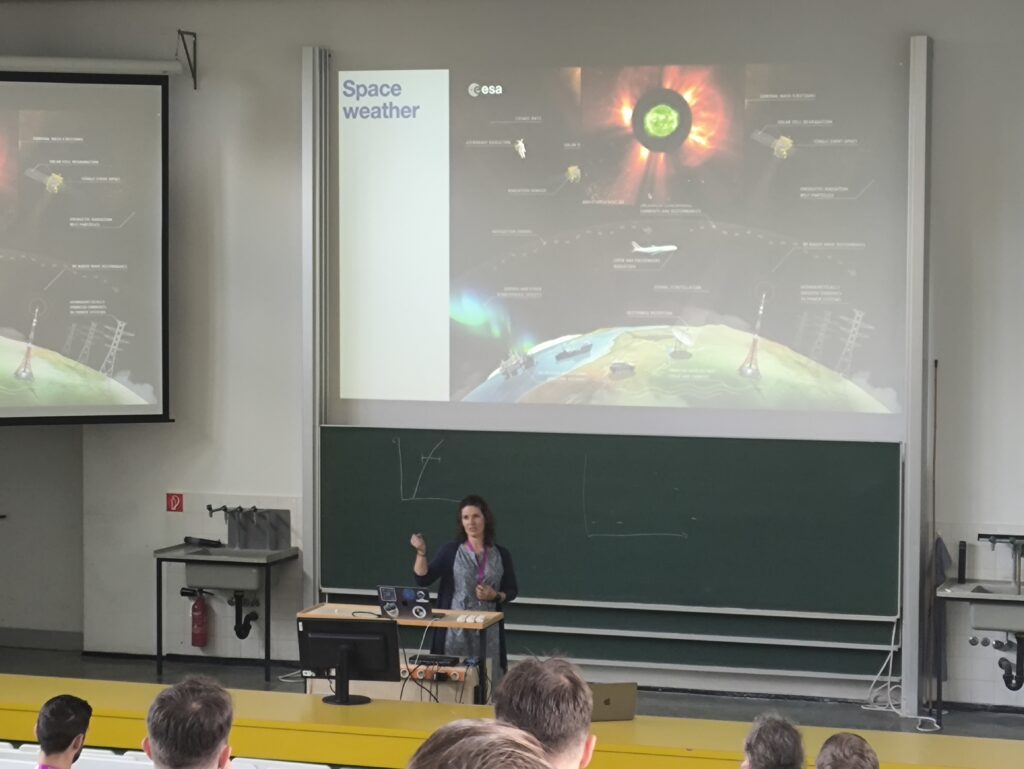
The second lecture was given by Nina Dresing. It focused on the characteristics of Solar Energetic Particle events covering their onset time, peak time and peak flux, fluence, and anisotropy, providing participants with the background needed to interpret SEP observations and their temporal, spatial and energetic properties. Importantly, she introduced the actual methods employed by the scientific community to connect in-situ measurements to the underlying accelerators and transport further discussing their uncertainties.
The lectures were complemented by an extensive hands-on programme centered on tools developed and used within SPEARHEAD. In particular, students were familiarized and worked with FDAT for the analysis of Forbush Decreases, the Velocity Dispersion Analysis (VDA), and SEP-PACT tools for the characterisation and analysis of SEP events from Solar Orbiter.
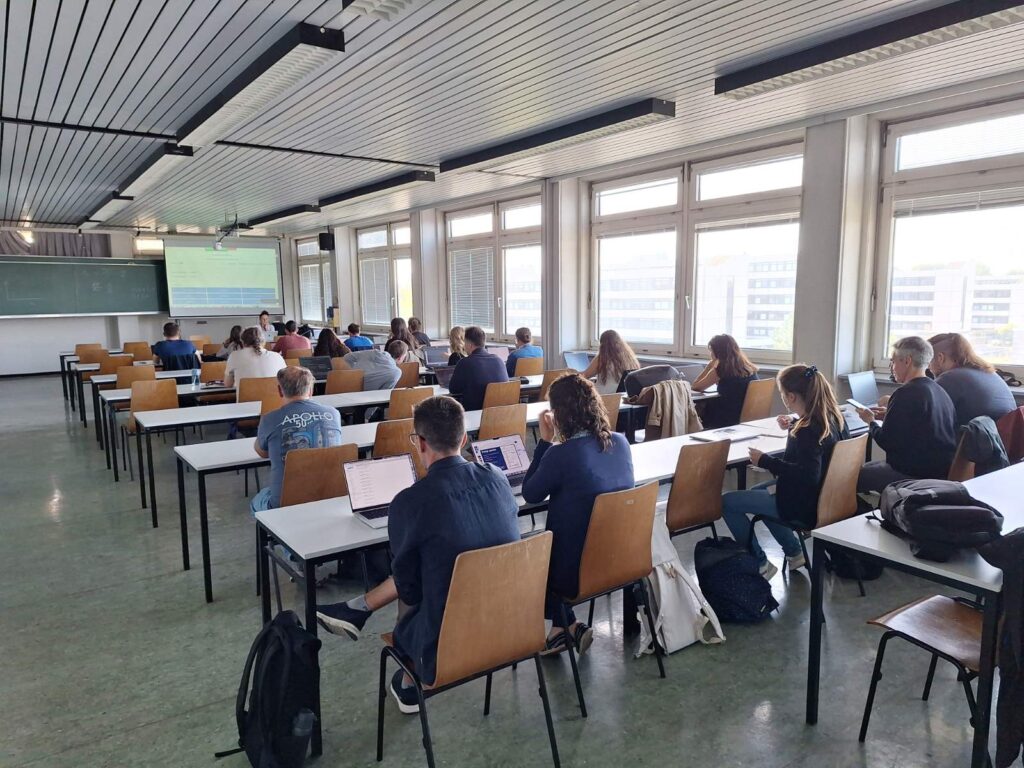
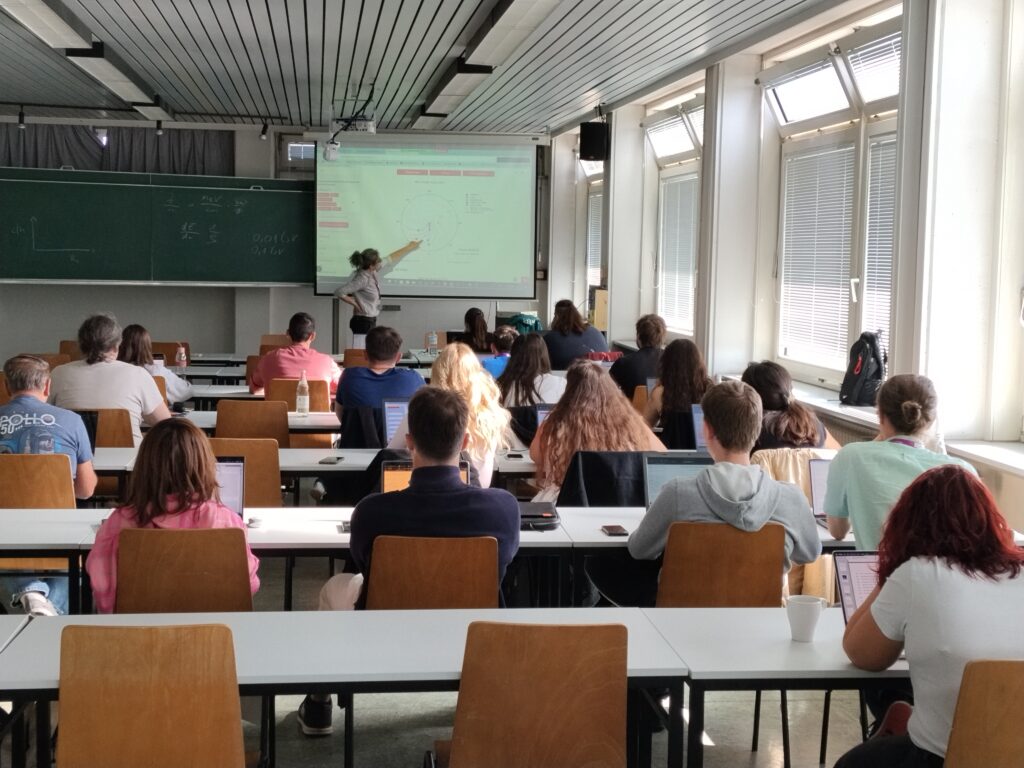
The practical activities were further complemented by tools developed within SOLER, including Solar-MACH, which supports the exploration of spacecraft locations and magnetic connectivity in the heliosphere, and the Multi-plot and Onset determination tools, allowing different solar and heliospheric observations to be brought together for a more complete view of individual events.
By combining GCR modulation, Forbush Decreases and SEP observations within the same day, participants could explore two complementary manifestations of solar activity: the modulation of the background Galactic Cosmic Ray population and the acceleration and propagation of energetic particles from the Sun.
Day 3 therefore placed particular emphasis on one of the key objectives of the School: moving from the underlying physics to the practical use of modern analysis tools for multi-spacecraft and ground based observations.