The final two days of the SPEARHEAD Workshop #3 in Kiel brought together observations, modeling, new scientific results and SPEARHEAD tools across a broad range of energetic-particle topics.
Day 2 opened with a focus on Particle transport in the heliosphere, linking fundamental theory with observations. This was followed by the presentation of the SPEARHEAD Velocity Dispersion Analysis (VDA) Tool, alongside studies of inverse VD events and counterstreaming electron beams in flux-rope CMEs. The programme then moved towards a detailed presentation on the interpretation of Solar Energetic Particle (SEP) observations utilizing available tools of the heliospheric community. Next the SPEARHEAD Solar Orbiter Catalogue implementation with the SEP-PACT Tool was presented followed by multi-spacecraft studies of particle acceleration and transport during GLE75, and the potential use of the REleASE system for Mars exploration.
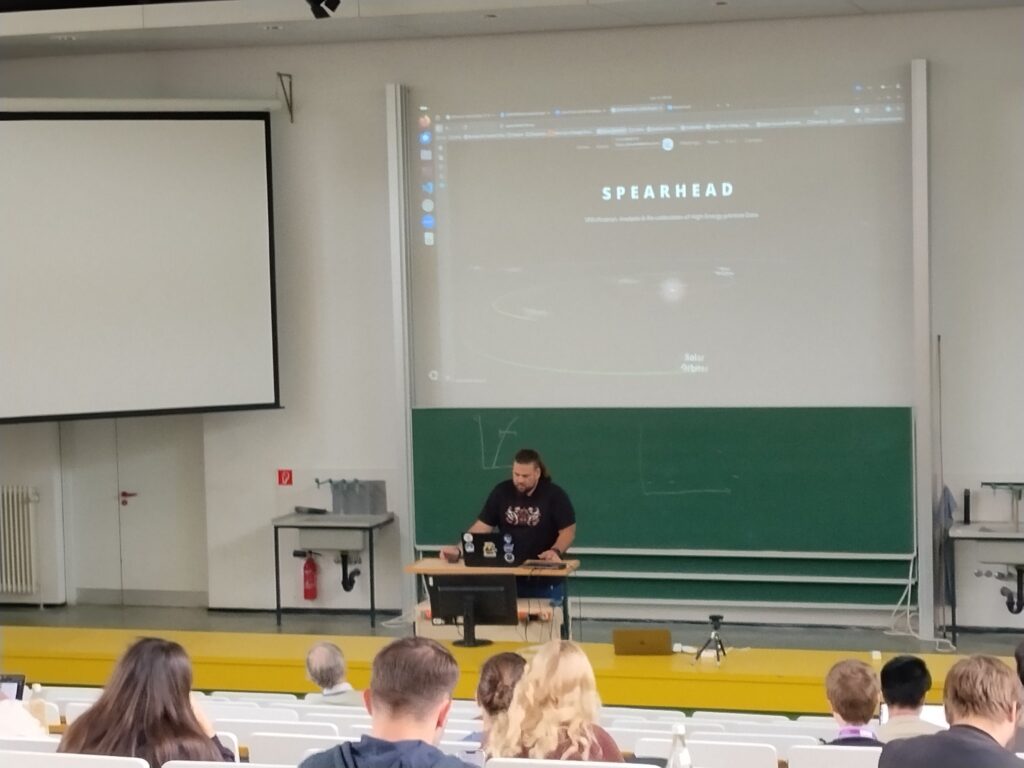
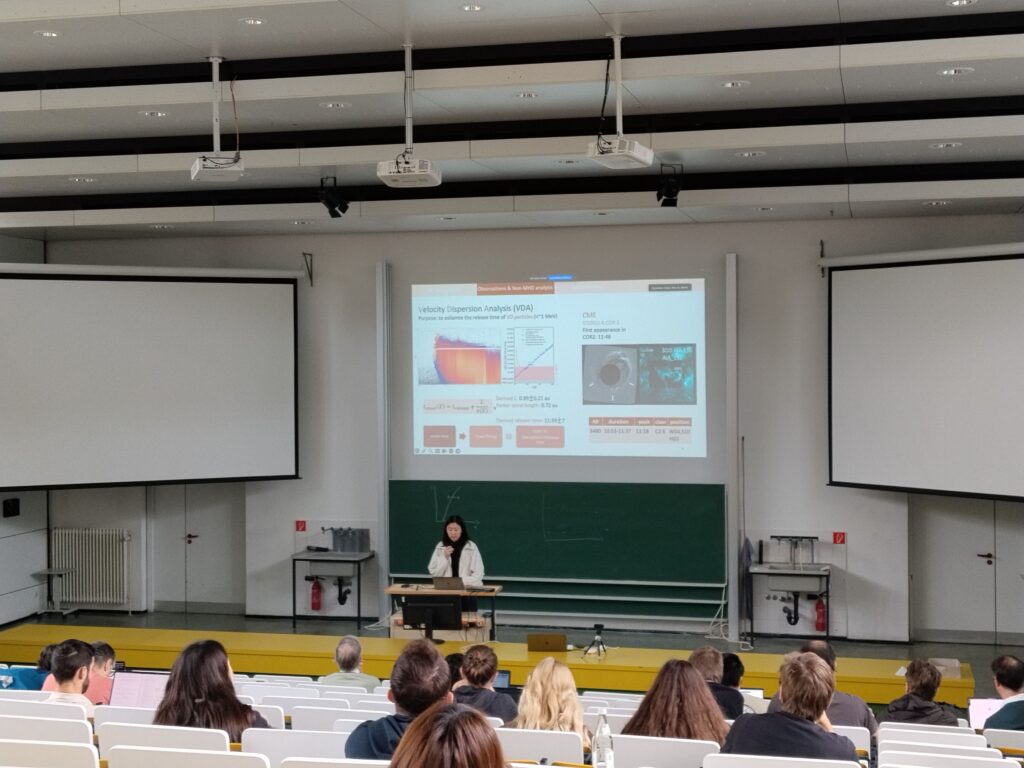
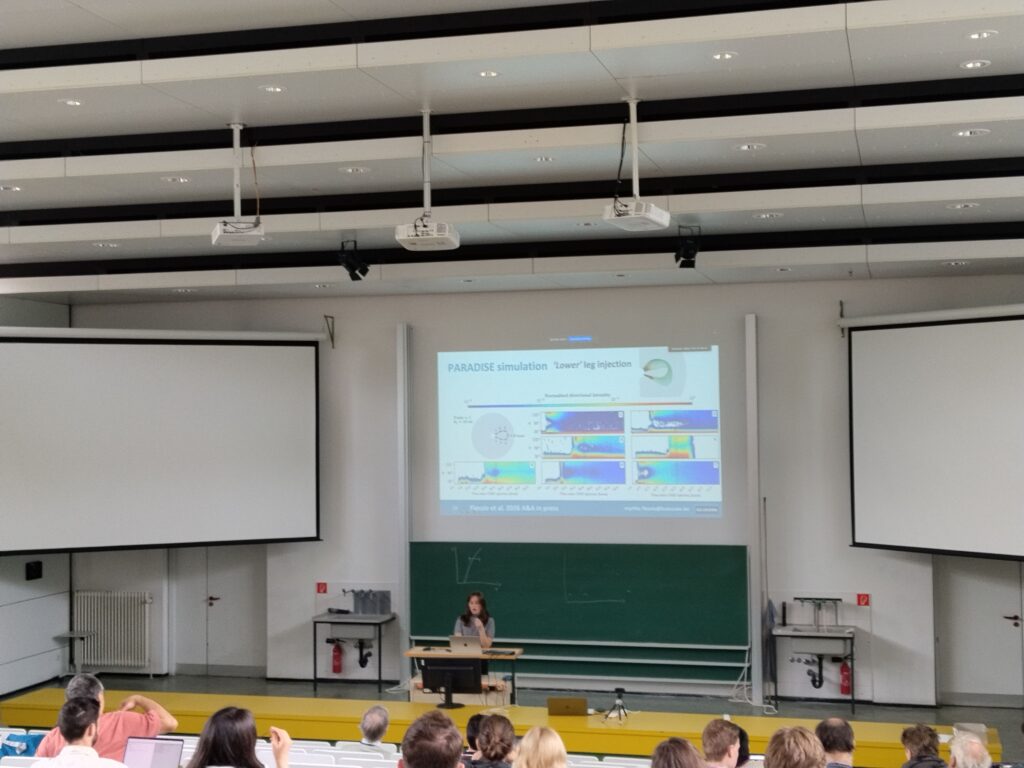
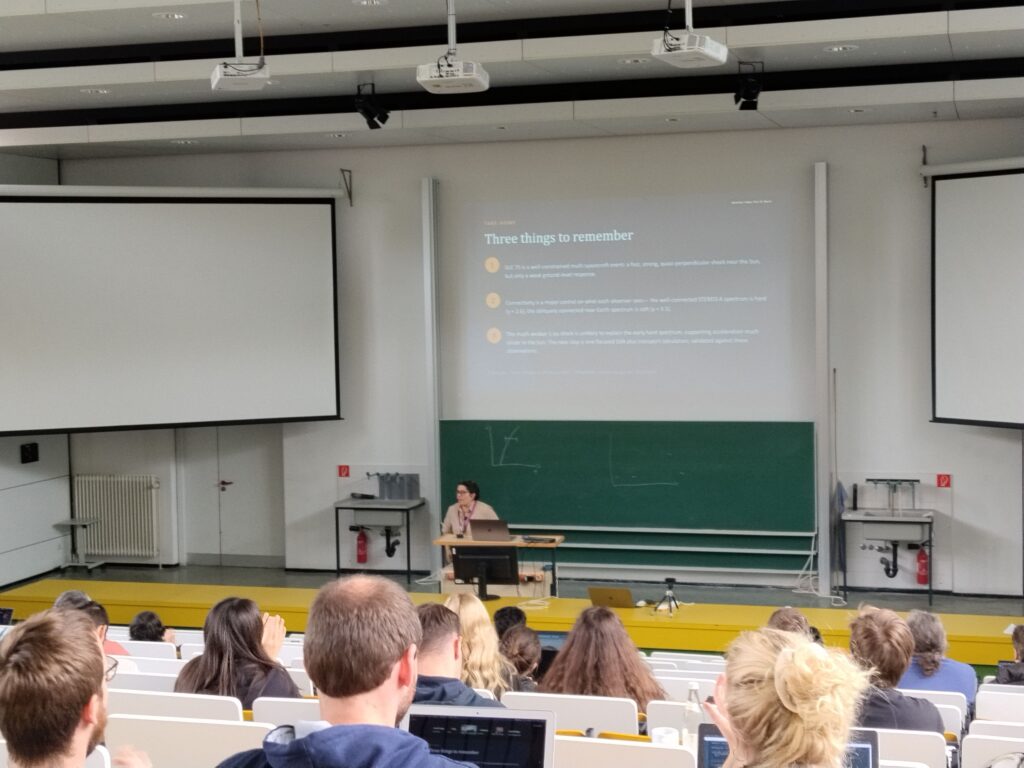
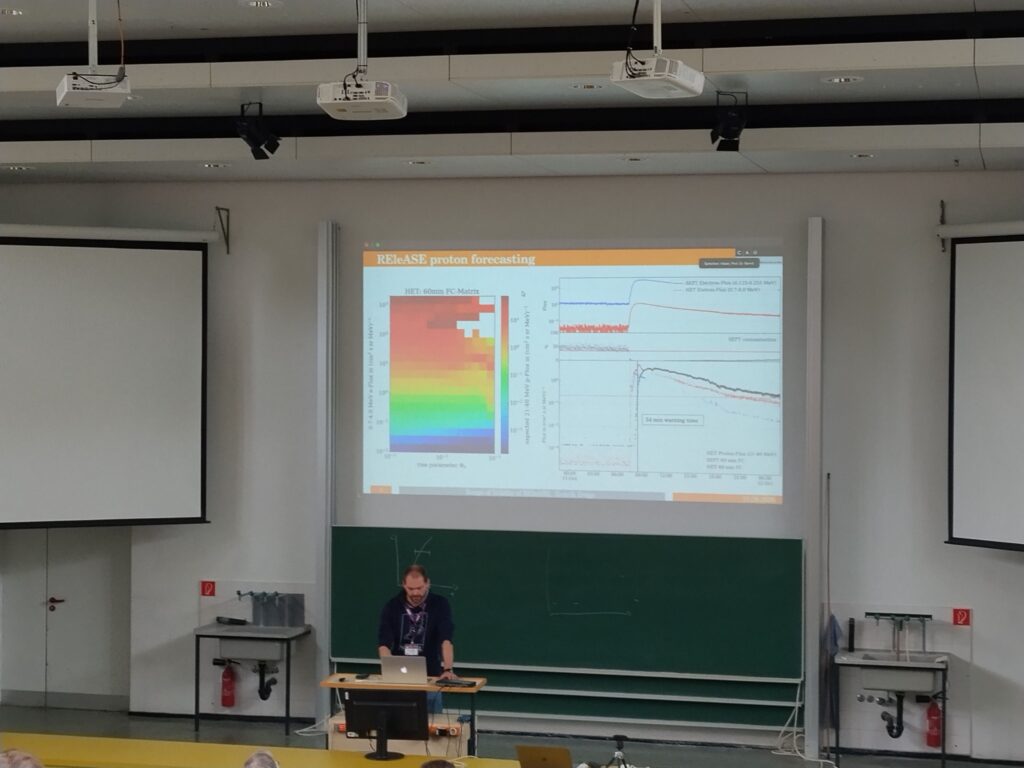
In the afternoon, the attention shifted to Forbush decreases (FD) and Galactic Cosmic Rays (GCRs), with presentations covering observations and modelling from space- and ground-based detectors, the SPEARHEAD FD catalogues and FDAT tool, CME evolution through the heliosphere, rigidity-dependent GCR modulation and real-time detection of FDs onboard spacecraft.
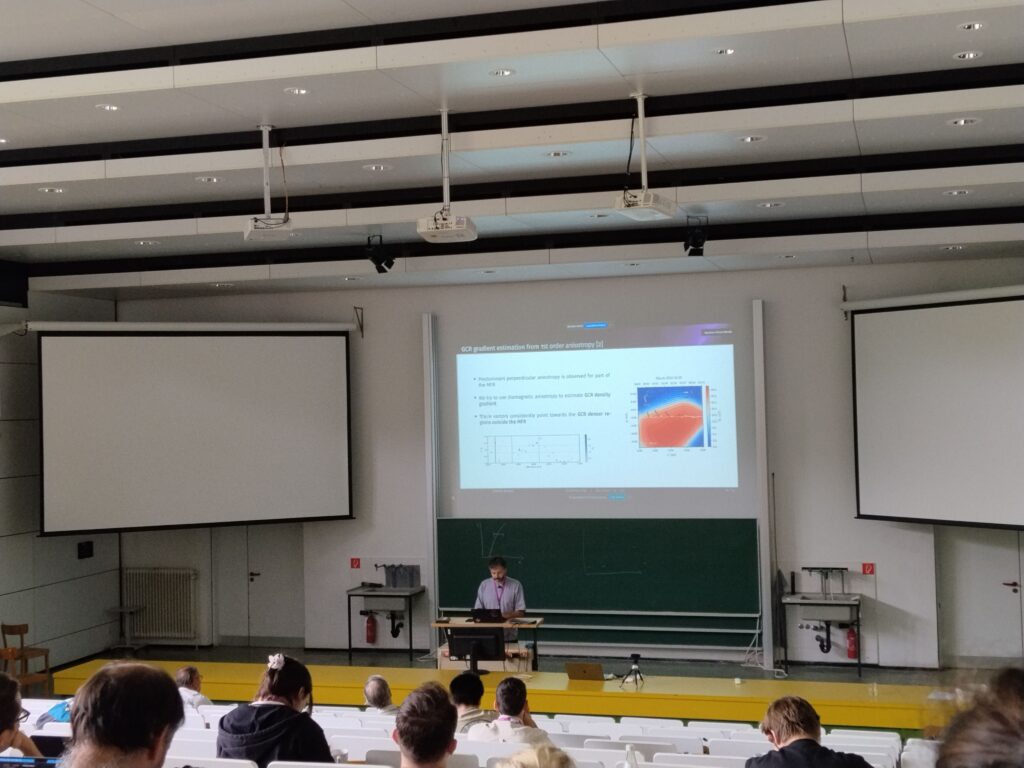
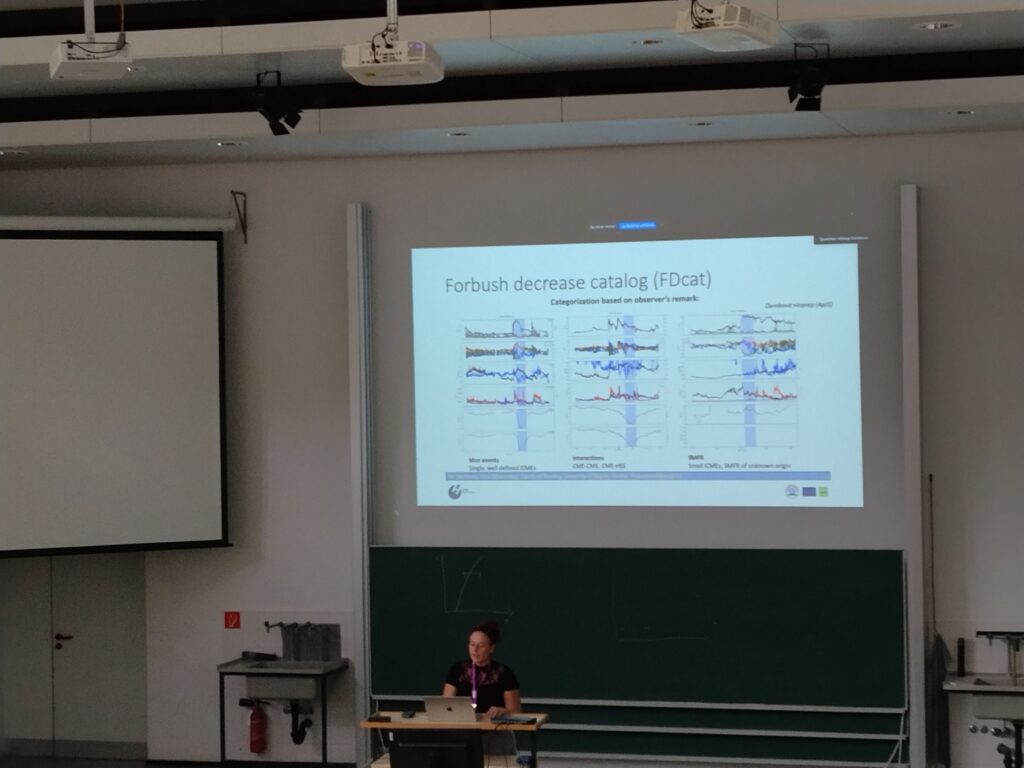
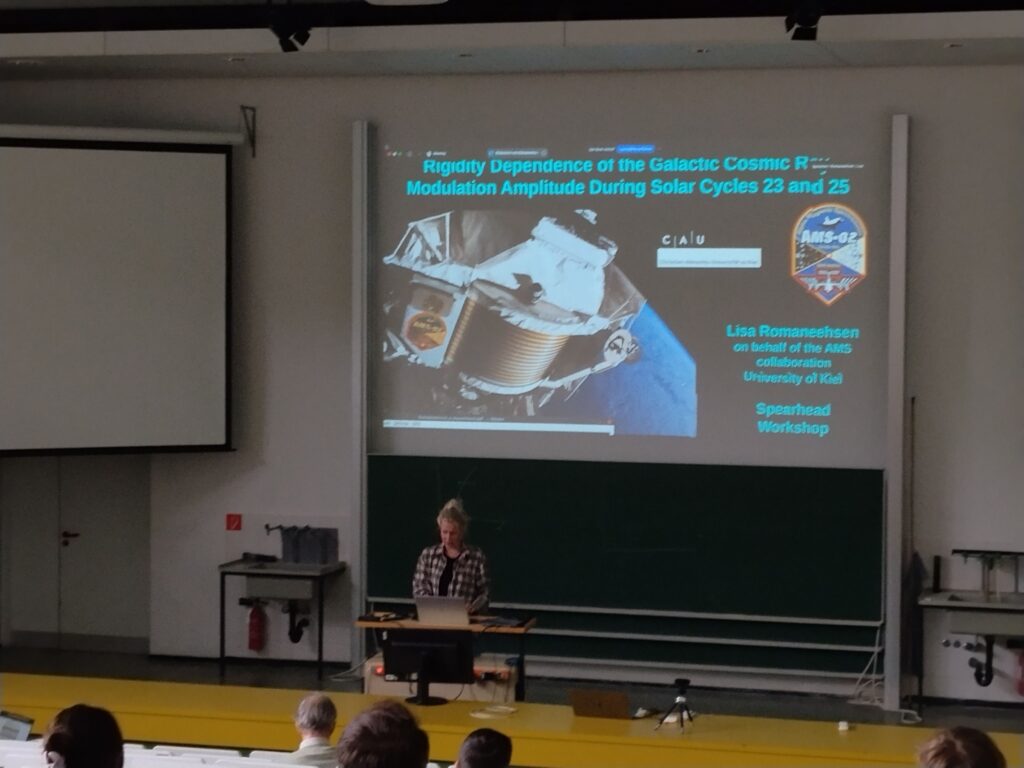
The final scientific block of Day 2 addressed Particle acceleration and highlighted the pitfalls of VDA analysis though detail simulation studies. It then explored the highest-energy relativistic SEPs, GLEs, including results produced within SPEARHEAD for GLE76, observations from Solar Cycle 25 covering all GLEs from GLE74-GLE77 and studies of 3He-rich SEP events from Solar Orbiter. The day concluded with a meeting of the External Advisory Committee and the Workshop social dinner.
The opening session of Day 3 explored high-energy SEPs together with gamma-ray observations from Fermi-LAT and GBM, providing a broader view of the connection between energetic particles and their solar sources. The session continued with SPEARHEAD results on SEPs and structures in interplanetary space – providing context for the transport conditions of SEPs, studies of CME–CME interactions and turbulence associated with GLE77, and a presentation of the physics extracted from the SPEARHEAD Solar Orbiter catalogue. The morning programme also included the Best Student Presentation – as decided in the School – and an open scientific discussion.
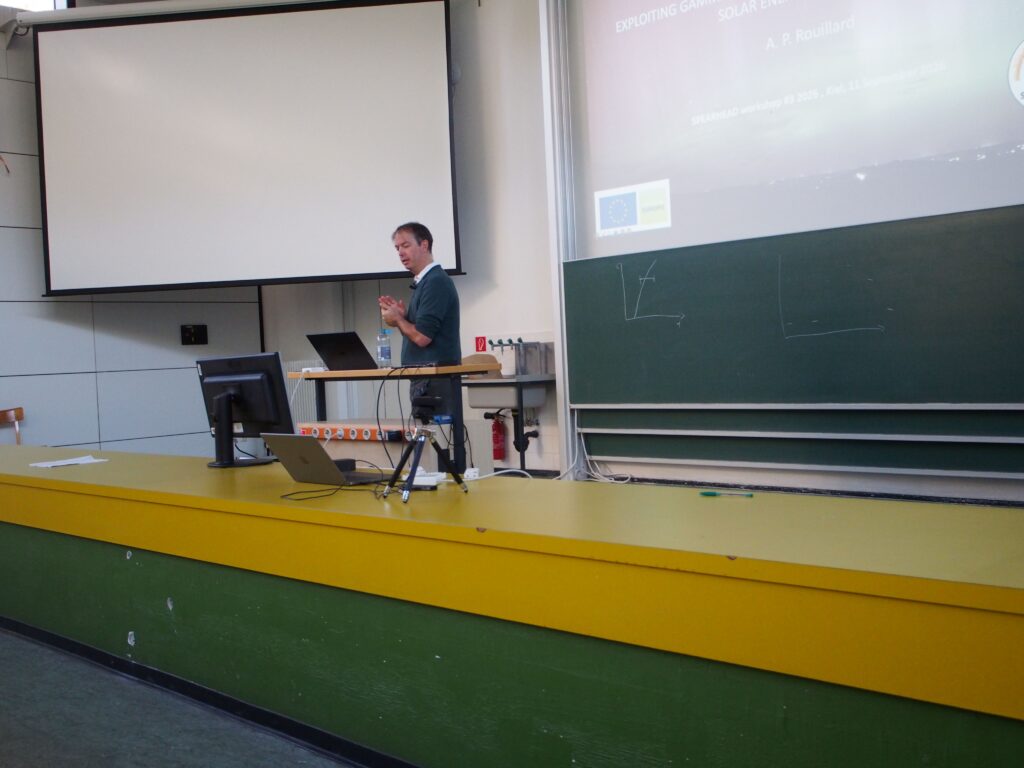
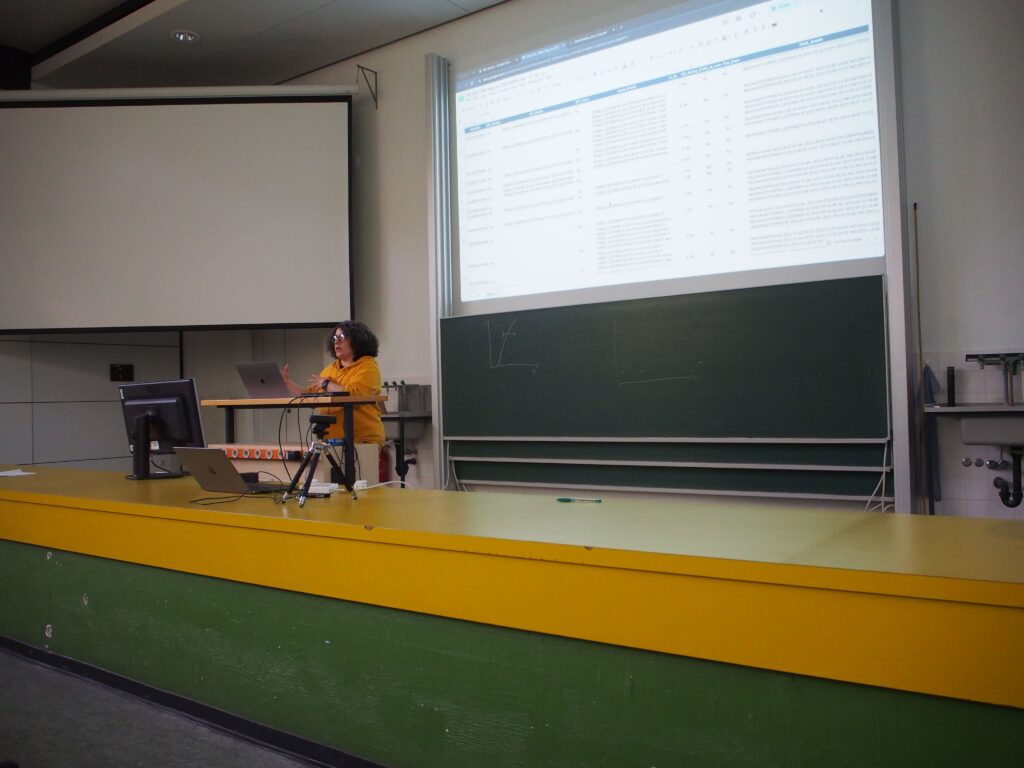
The Workshop then turned its attention to the future, with the HENON mission standing out as a particularly timely and compelling example of the next generation of heliophysics capabilities. With its launch planned for early 2027, HENON brought a strong sense of immediacy to the discussion, showing how new missions can soon translate innovative observations into advances in both fundamental heliophysics and operational space weather. Its presentation offered a concrete glimpse of what comes next for the community, and of how future observations can extend our view of the heliosphere in new and strategically important ways.
This forward-looking perspective flowed naturally into the open session “What comes next?”, which explored the legacy of SPEARHEAD, the opportunities offered by new instrumentation and future missions, and the rapidly expanding role of Artificial Intelligence in SEP science. The final panel discussion brought these themes together in a lively exchange, highlighting how the tools, methods and collaborations developed within SPEARHEAD can help shape the next phase of energetic-particle and space-weather research.
Across Days 2 and 3, SPEARHEAD Workshop #3 highlighted how observations, modelling, catalogues and analysis tools can be combined to improve our understanding of energetic particles throughout the heliosphere, while also opening the discussion on the missions, technologies and scientific questions that will shape the field in the years ahead.
A warm thank you to all speakers, contributors and participants – both in Kiel and online – and to CAU for hosting the final Workshop of the SPEARHEAD project.