
The SPEARHEAD School 2026 officially started yesterday on 4 September in Kiel, Germany, bringing together students, early-career researchers and experts for five days of lectures, practical exercises and hands-on training focused on high-energy particles in the heliosphere.
Hosted by the Christian-Albrecht-Universität zu Kiel (CAU), the School provides participants with an opportunity to work directly with the scientific concepts, datasets and tools developed within the project.
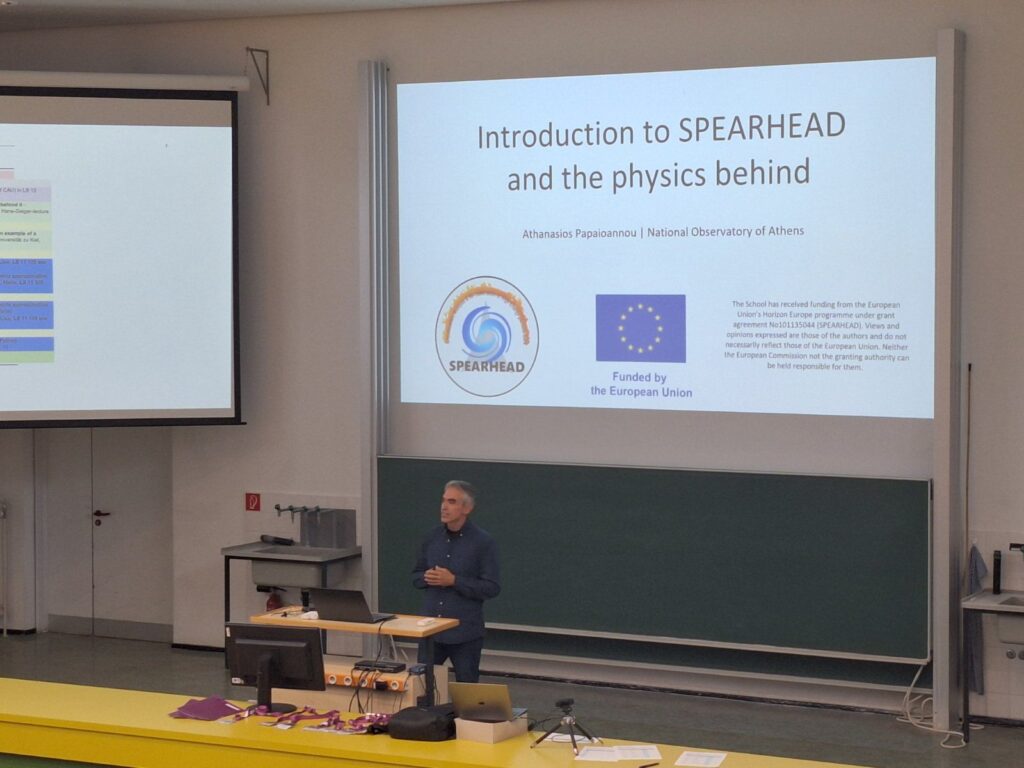
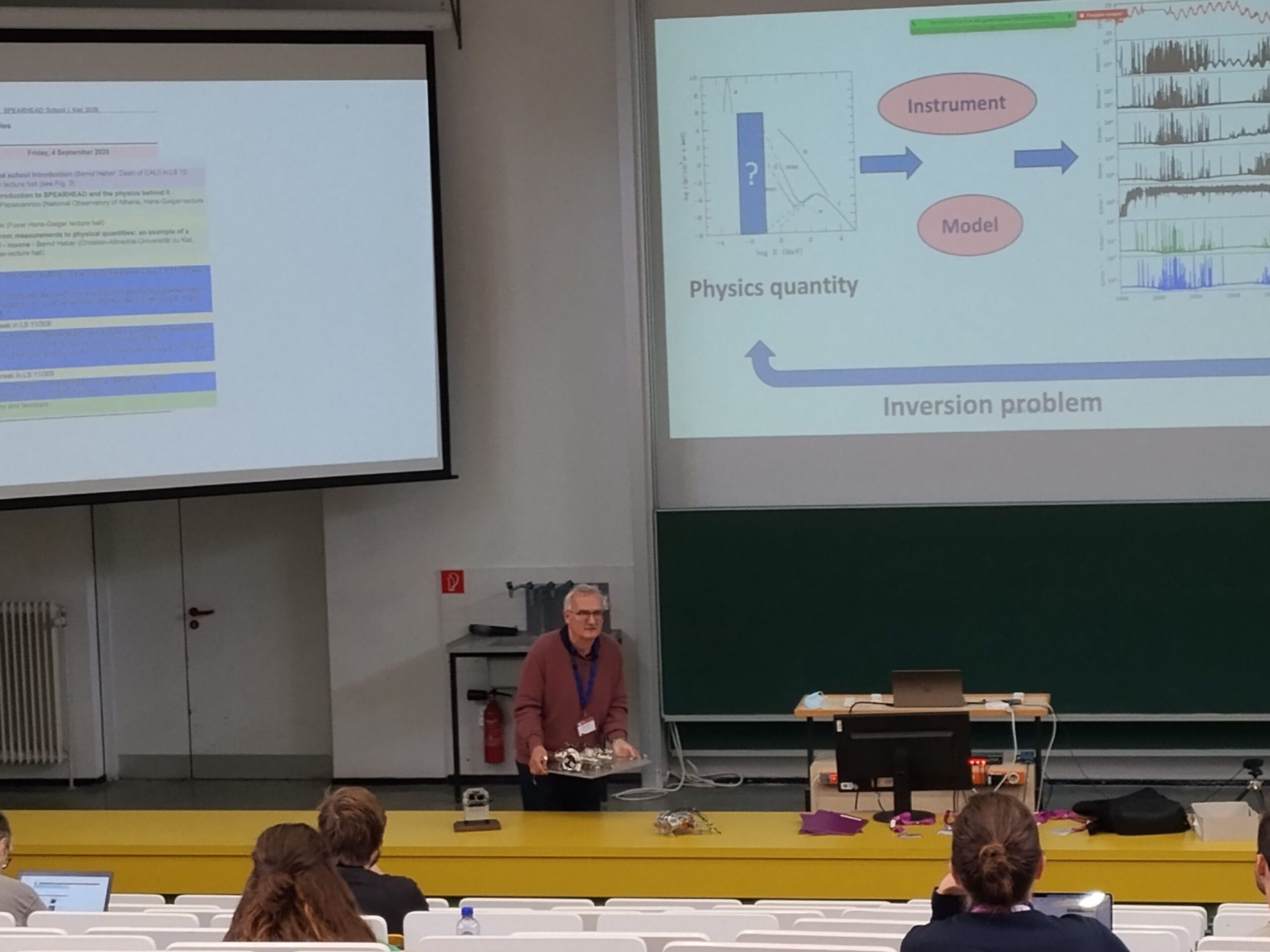
The first day opened with a welcome and introduction to the School, followed by lectures delivered by Athanasios Papaioannou, who introduced the scientific background of SPEARHEAD and the key aspects of energetic-particle physics and measurements, and Bernd Heber who moved from fundamental concepts to practical applications addressing how particle-detector measurements are converted into physical quantities and how energetic-particle observations can be characterised and interpreted.
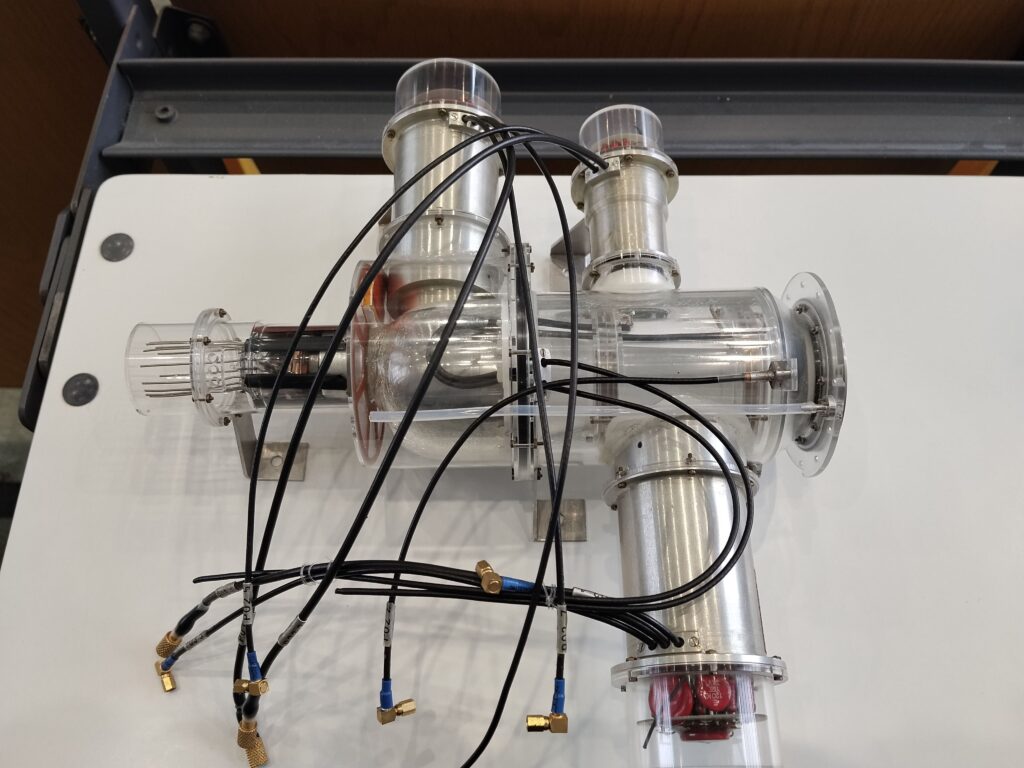
A strong emphasis was placed on hands-on learning. The practical sessions were highly engaging, giving participants the opportunity to work directly with measurements, detector concepts and analysis methods. Participants worked with a muon telescope, explored detector response through the Bethe–Bloch energy-loss relation and geometrical approximations, and were introduced to practical approaches for modelling particle interactions and detector measurements. The first day concluded with further hands-on activities involving tools and methods relevant to SPEARHEAD, including G4VM and Python-based approaches, together with active discussion, questions and exchange between lecturers and participants.
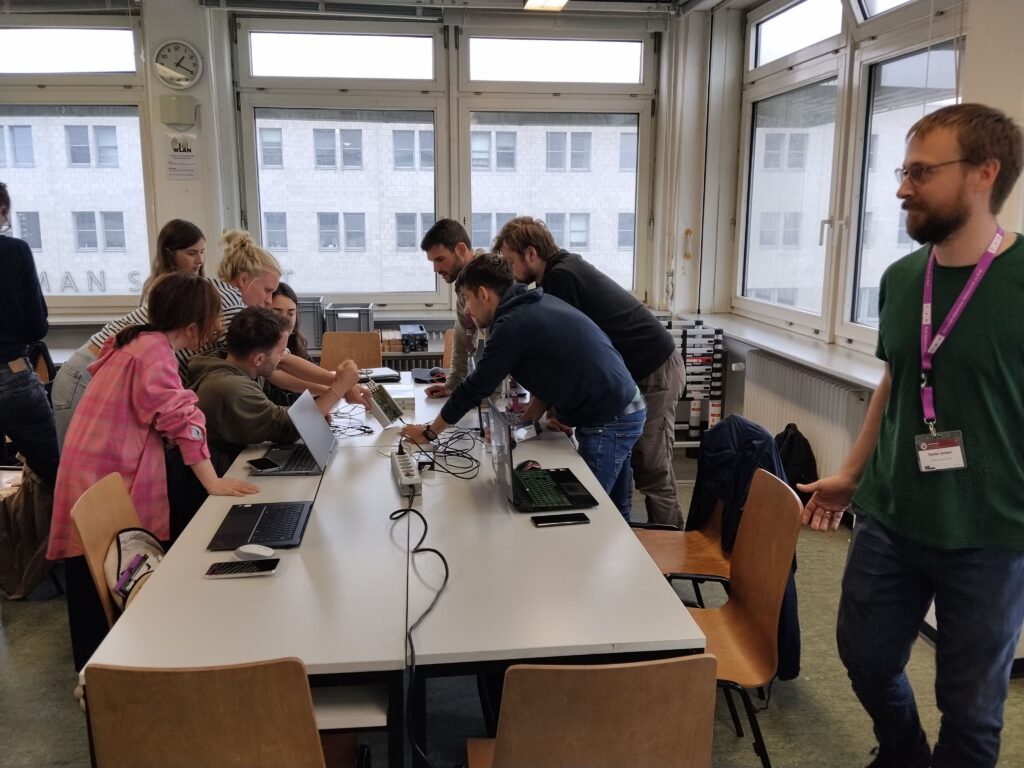
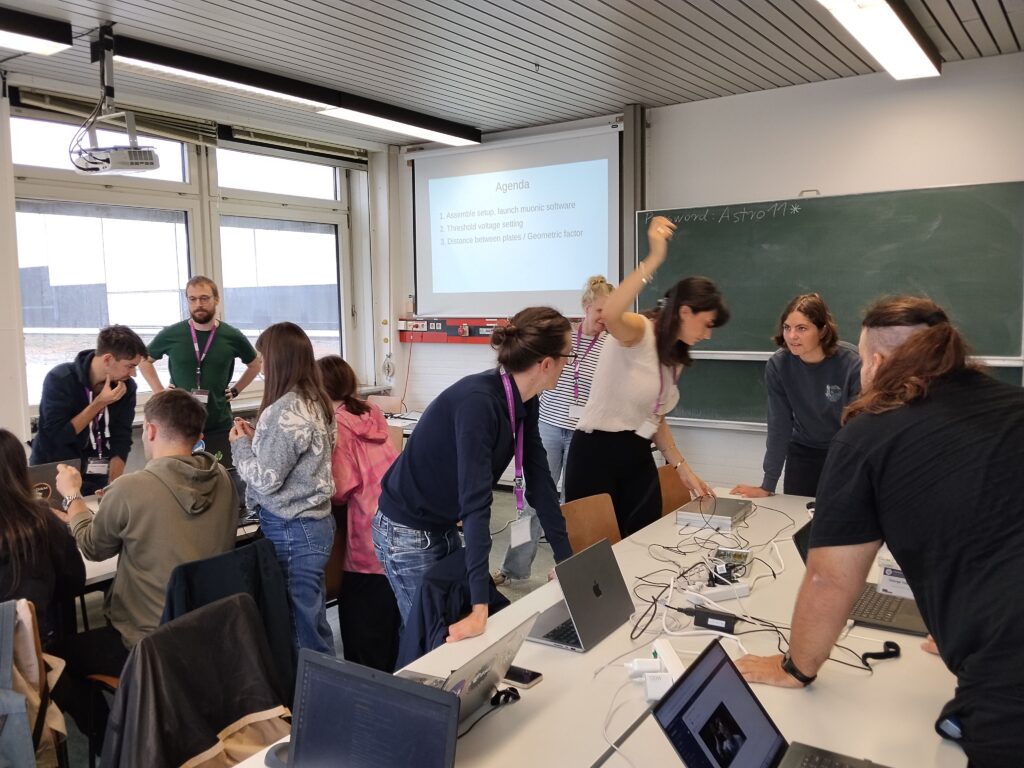
The School continues until 8 September, progressively moving towards the analysis of ground-based measurements, Galactic Cosmic Rays (GCRs) and Forbush decreases (FDs), Solar Energetic Particle (SEP) event analysis, and direct application of SPEARHEAD tools and datasets. It will be followed by SPEARHEAD Workshop #3 from 9–11 September, where the latest scientific results and developments of the project will be presented and discussed.
The first day already captured one of the central aims of the School: connecting the physics of high-energy particles with real measurements, practical analysis techniques and the tools needed to study them.